 Madison ClarkConfident librarian with a commanding presenceView current route ↗
Independent US product map · observed October 19, 2026
Funfun AI, from first look to a defined character
The public product combines a browsable cast, a visual character builder, persona instructions, and character-centered chat. This guide separates what the source actually shows from what a prospective user still needs to verify.
- 6
- public captures
- 7
- visible creator stages
- 0
- prices guessed
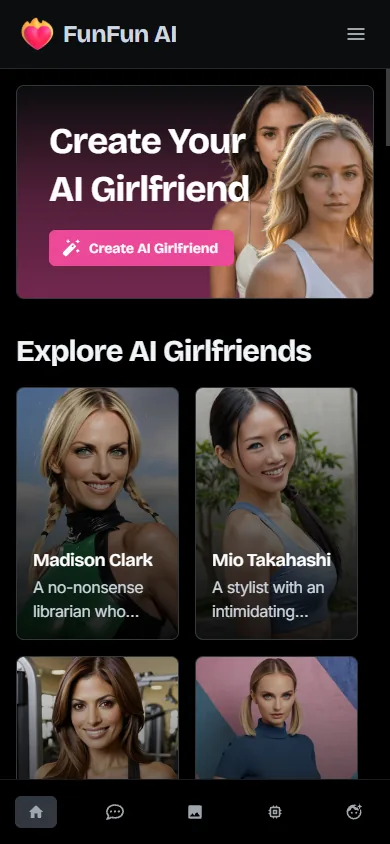 01 / Mobile entry
Answer first
What is Funfun AI, and what happens before you pay?
Funfun AI is an 18+ AI companion service for choosing a fictional character or building one before chat. Its current web terms say the preview reaches a payment page after five messages; monthly or annual subscribers receive unlimited messaging and 100 monthly tokens for extended features, but the public terms do not state a dollar price. The same terms say flagged conversations may be manually reviewed, so “generally confidential” is not the same as private from all service access.
00
THE PUBLIC CAST
15 Funfun AI models, visible without extra clicks
These fifteen clearly adult, fictional characters come from the public Funfun catalog. The cards provide a visual comparison of roles and styles; they do not guarantee chat quality, availability, or access to a particular paid feature.
Madison ClarkConfident librarian with a commanding presenceView current route ↗ Sofia MartinezAthletic fitness coach and outdoor enthusiastView current route ↗
 Jordana BellAssertive historian with an academic focusView current route ↗
 Olivia BrownMusician with pottery and hiking interestsView current route ↗
 Yasmin MansourWarm dancer, gardener, and travelerView current route ↗
 Ananya SharmaQuiet librarian with creative hobbiesView current route ↗
 Destiny LewisDriven lawyer with an experimental streakView current route ↗
 Sakura YamamotoPlayful bartender with musical interestsView current route ↗
 Zara AhmedSoftware developer who enjoys music and mangaView current route ↗
 Mia AndersonEccentric journalist with a creative outlookView current route ↗
 Eva NovakFree-spirited dancer and photographerView current route ↗
 Pamela SmithHistorian, reader, and frequent travelerView current route ↗
 Camila TorresAdventure-minded photographerView current route ↗
 Priya PatelSeasoned journalist and writerView current route ↗
 Imani BrooksAssertive teacher with wide-ranging interestsView current route ↗
Every portrait uses the local commercial handoff. Public catalog characters are product examples, not real people.
01
THE PRODUCT
What Funfun AI is in practical terms
Funfun AI presents a character-companion experience rather than a general-purpose answer engine. On the public home page, the main choices are to create an AI girlfriend or explore existing AI characters. The catalog is made of named, fictional profiles with short descriptions. Those descriptions combine a role, a temperament, and a few interests, giving a visitor enough context to choose a conversational direction before opening a chat.
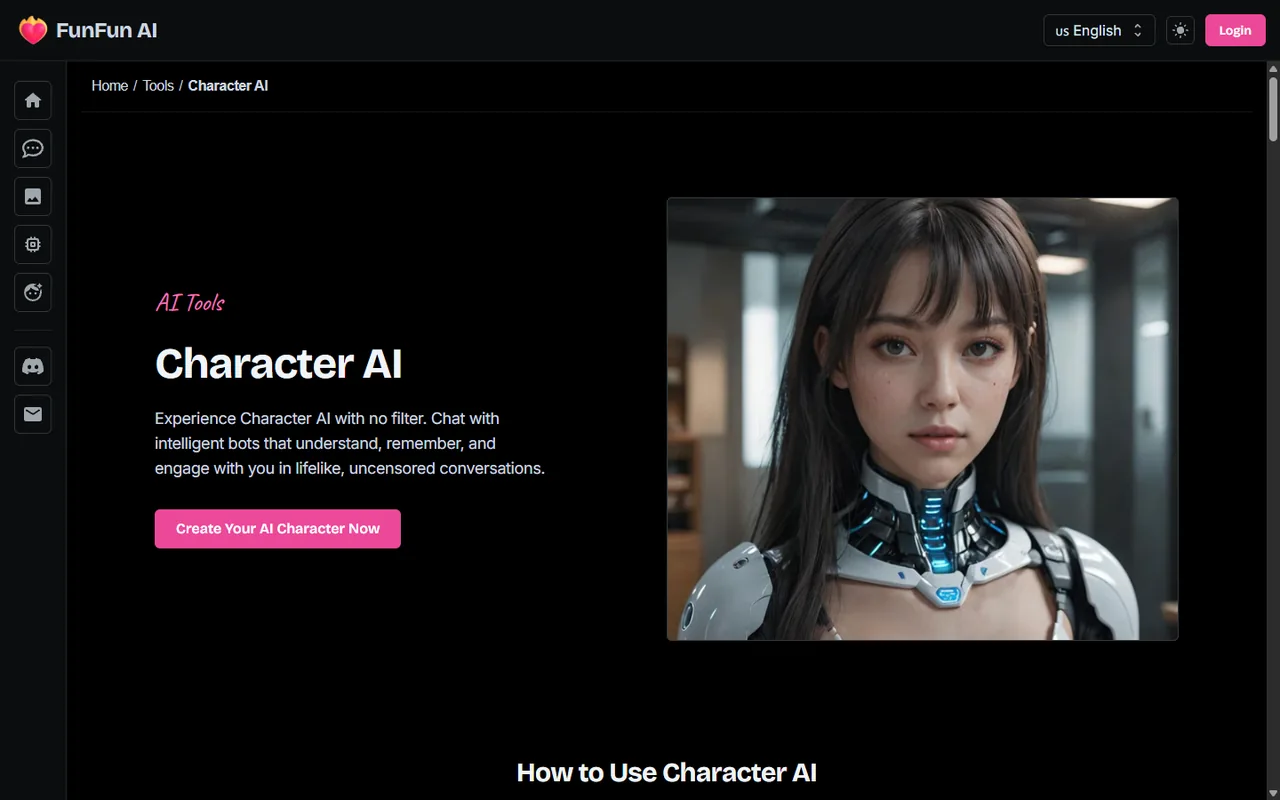
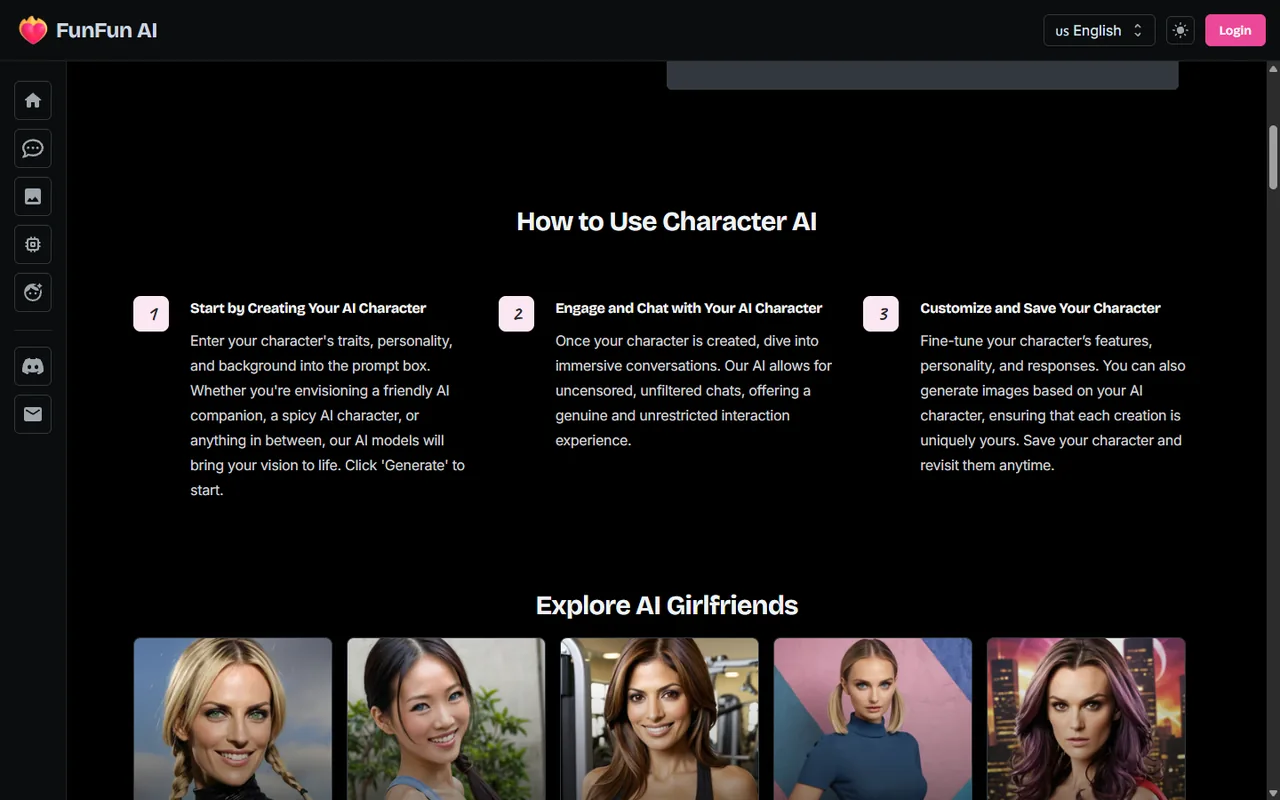
The second half of the public experience is creation. The visible builder breaks character setup into numbered stages and uses selectable visual controls. A separate public tool page says a creator can define traits, personality, and background, then chat, refine the character, save it, and generate character-related images. Those are source statements, not a promise that every capability is available in every account state or plan.
The site’s public FAQ also supplies an important boundary: the character is not a real person. The experience simulates conversation for entertainment and companionship. That distinction should shape how it is used. Emotional tone can feel personal, but the response still comes from software. Sensitive identifiers, passwords, financial information, private documents, and information about other people should stay out of the conversation.
02
THE FLOW
How the public Funfun AI journey works
Browse before building
The catalog gives a fast read on the kinds of personas the product foregrounds. Names, jobs, character traits, and hobbies make each card more than a portrait. Browsing first is useful because it reveals how concise profile writing can establish a role without turning into a biography.
Set visible attributes
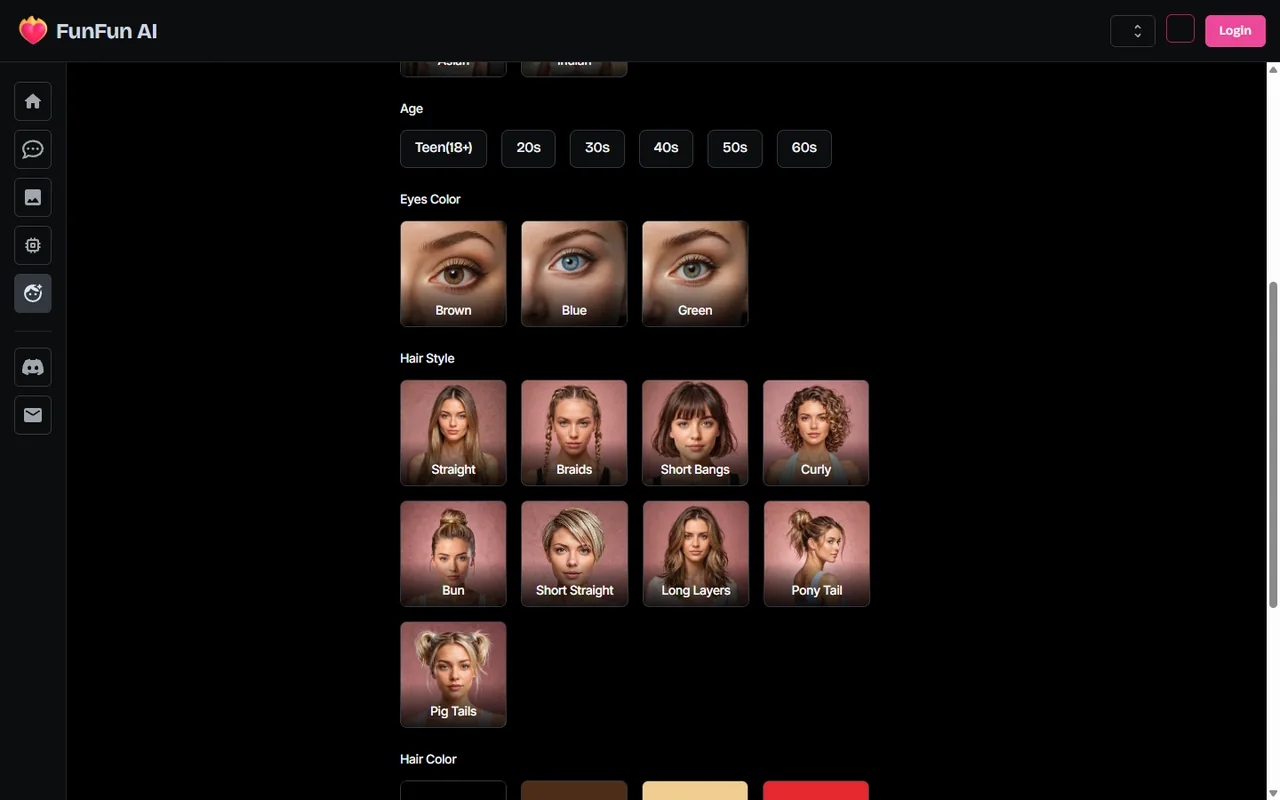
The public creator shows a sequence of seven stages. In the captured first stage, a user can see fields and tiles for a name, presentation options, adult age bands, eye color, hairstyle, and hair color. The interface favors concrete choices over an empty prompt box.
Write the character brief
The character tool’s own explainer calls out traits, personality, and background. A useful brief gives each category a job: traits set recurring behavior, personality sets voice and attitude, and background gives the character facts it can draw on during a scene.
Use conversation as a quality check
After setup, short test prompts can reveal whether the persona is coherent. Ask for an introduction, a response to a small conflict, a memory of an earlier detail, and a change of topic. If the voice shifts too much, adjust the brief rather than adding unrelated traits.
Save only what improves consistency
The public source describes later customization and saving. Refinement should be selective. One clear boundary or one strong example reply is usually easier for a model to follow than a dense collection of overlapping instructions.
03
THE EVIDENCE
Six public Funfun AI screens, read closely
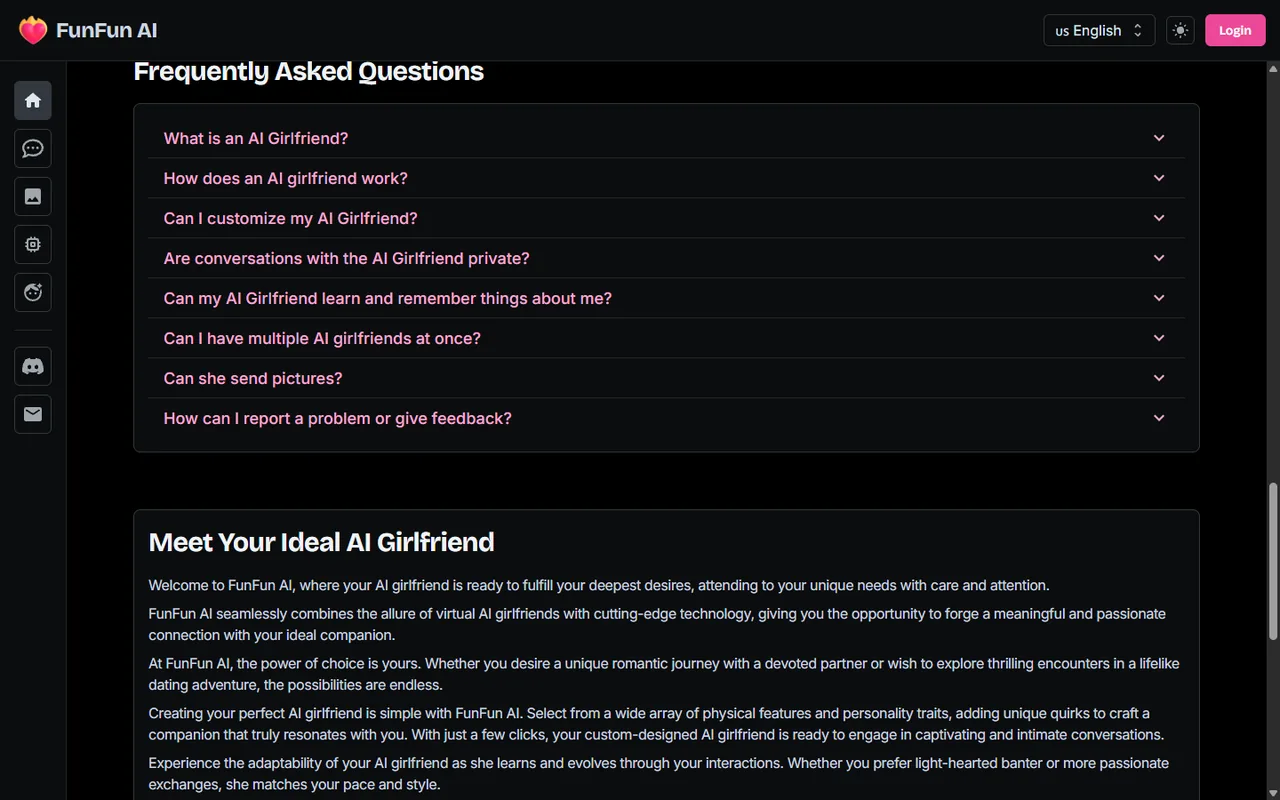
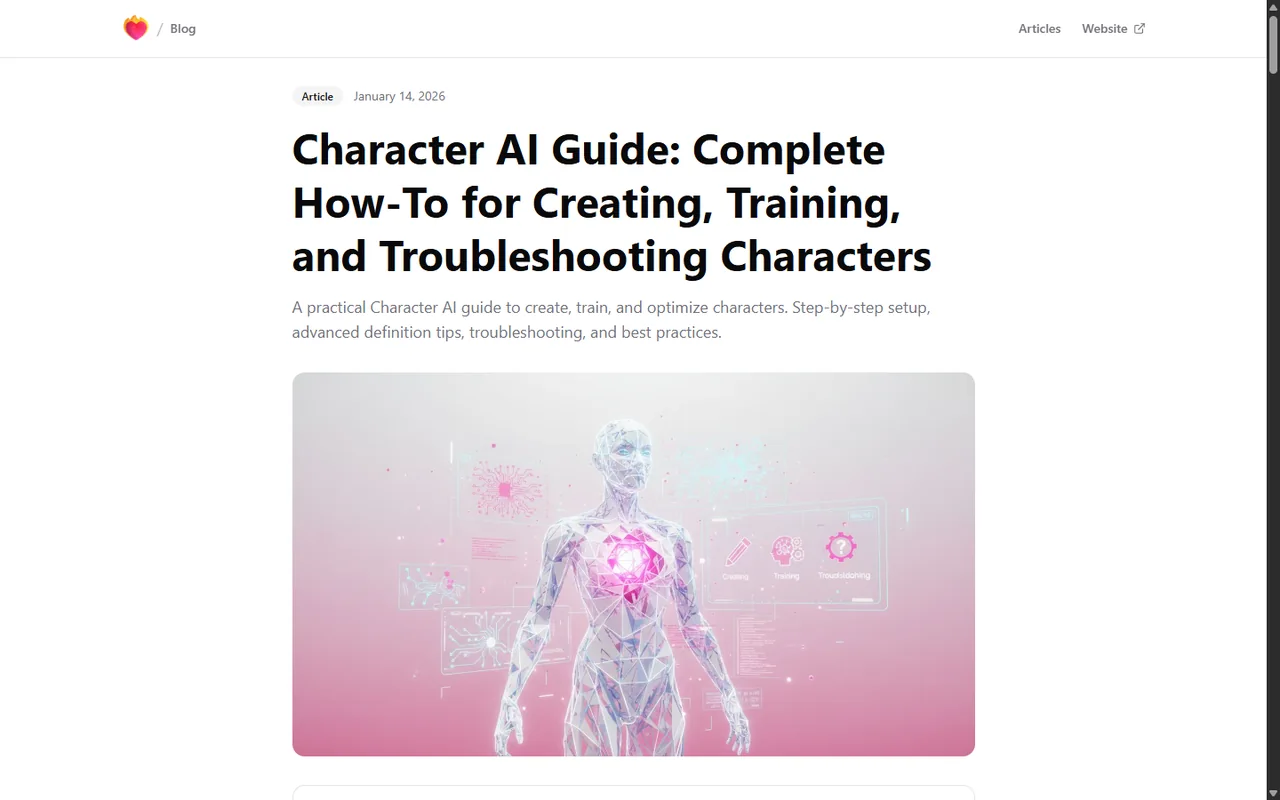
These are real browser captures from the authorized source. They were resized to WebP but not composited, retouched, or presented as screens from another product. Each caption explains what the image can support.
04
THE DECISION
How to decide whether this workflow fits
You want a visual starting point
The combination of a public character catalog and tile-based creator is suited to people who prefer examples and concrete appearance controls before writing a detailed prompt.
You care about a defined persona
The public copy repeatedly centers traits, personality, background, and character continuity. That makes the experience more relevant to roleplay and recurring fictional conversation than to neutral reference questions.
You need a specific premium feature
Images, saving, memory, and other capabilities may depend on account state or current product rules. Confirm the feature in the live service before making a decision; this guide does not infer access from a marketing sentence.
You need professional or human support
An AI character can produce responsive language, but it is not a person, licensed adviser, emergency service, or confidentiality guarantee. High-stakes decisions belong with qualified human help.
A better first character brief
Role
State the fictional job or place in the scenario in one sentence.
Voice
Choose two compatible traits and one clear speaking style.
Context
Add only the background facts that should affect conversation.
Boundaries
Name topics, behaviors, and information that should stay out.
Examples
Provide one greeting and one response that demonstrate tone.
Review
Run a short test conversation and revise contradictions first.
Funfun AI’s public pages make the overall direction understandable: discover a fictional character or create one, define the persona, and use chat as the ongoing experience. The strongest evidence is the interface itself, not an assumed feature list. The captures above document the catalog, builder, how-to flow, FAQ, mobile layout, and educational guide as they appeared publicly on October 19, 2026. The current terms add useful access facts, but they still do not prove a dollar price, a particular memory duration, or access to every feature in every account. The privacy policy and moderation language also mean a companion conversation should not be treated as a vault for sensitive information.
Questions before onboarding
Funfun AI FAQ
What can I see before creating a custom character?
The public site exposes a character catalog, a mobile discovery flow, a visual creator, a character-tool explainer, FAQs, and educational articles. That is enough to evaluate the general workflow and interface style. It is not enough to verify account-only settings, every chat mode, or the availability of a specific media feature in your region.
Is Funfun AI free to try?
The current web terms say a payment page appears after five messages. They then describe monthly and annual subscriptions rather than a permanently unlimited free plan. Because the terms do not list a public dollar amount, check the live checkout for the total, billing interval, renewal language, taxes, and any promotional conditions before you authorize payment.
What does a subscription include?
The same terms say subscribers receive unlimited messages and 100 tokens each month for extended features such as images, voice messages, and video messages. Public wording does not guarantee that every feature works on every device or with every character. Verify the exact controls in your account, and do not assume unused tokens roll over unless the checkout says so.
Are chats private from human review?
Not absolutely. The terms describe conversations as generally confidential but also say an automated moderation filter may flag content and that suspected violations can lead to manual review. The privacy policy describes contact information, analytics purposes, and trusted third parties used to operate the product. Avoid sharing passwords, financial details, medical files, workplace secrets, or information belonging to someone else.
Who should not rely on Funfun AI?
The service requires users to be at least 18. It is also a poor fit for anyone seeking a real relationship, guaranteed factual answers, licensed advice, emergency help, or legally protected professional confidentiality. Treat generated dialogue as fictional entertainment. Confirm important facts independently and contact qualified human support for medical, legal, financial, safety, or crisis decisions.
Continue with context